A diversity of plants matters more than individual superfoods
Why does the number of different plant species consumed weekly matter more than a single “superfood”?
Julia Zawadzka · · 7 min read
Goji berries, kale or chia seeds – is there really one “best” plant?
Goji berries for immunity, kale as a source of antioxidants, chia seeds for omega-3 fatty acids. This is how we often think about food: we link one product to one nutrient, and then to one specific health benefit.
It is a very convenient way of thinking. An orange becomes “vitamin C” and a banana becomes “potassium”. In nutrition science, reducing a complex food to single nutrients like this is called nutritional reductionism.
The problem starts when we use it to pick a single nutritional winner. Food is, in fact, far more complex.
One plant cannot replace another
Take broccoli, blueberries and flaxseed. We can put them all in one bag labelled “plant foods”. Yet in terms of what they actually contain, they are completely different foods.
Broccoli stands out for its glucosinolates, blueberries owe their colour to anthocyanins, and flaxseed is rich in lignans. On top of that, they differ in the amount and type of fibre, vitamins, minerals and many other compounds.
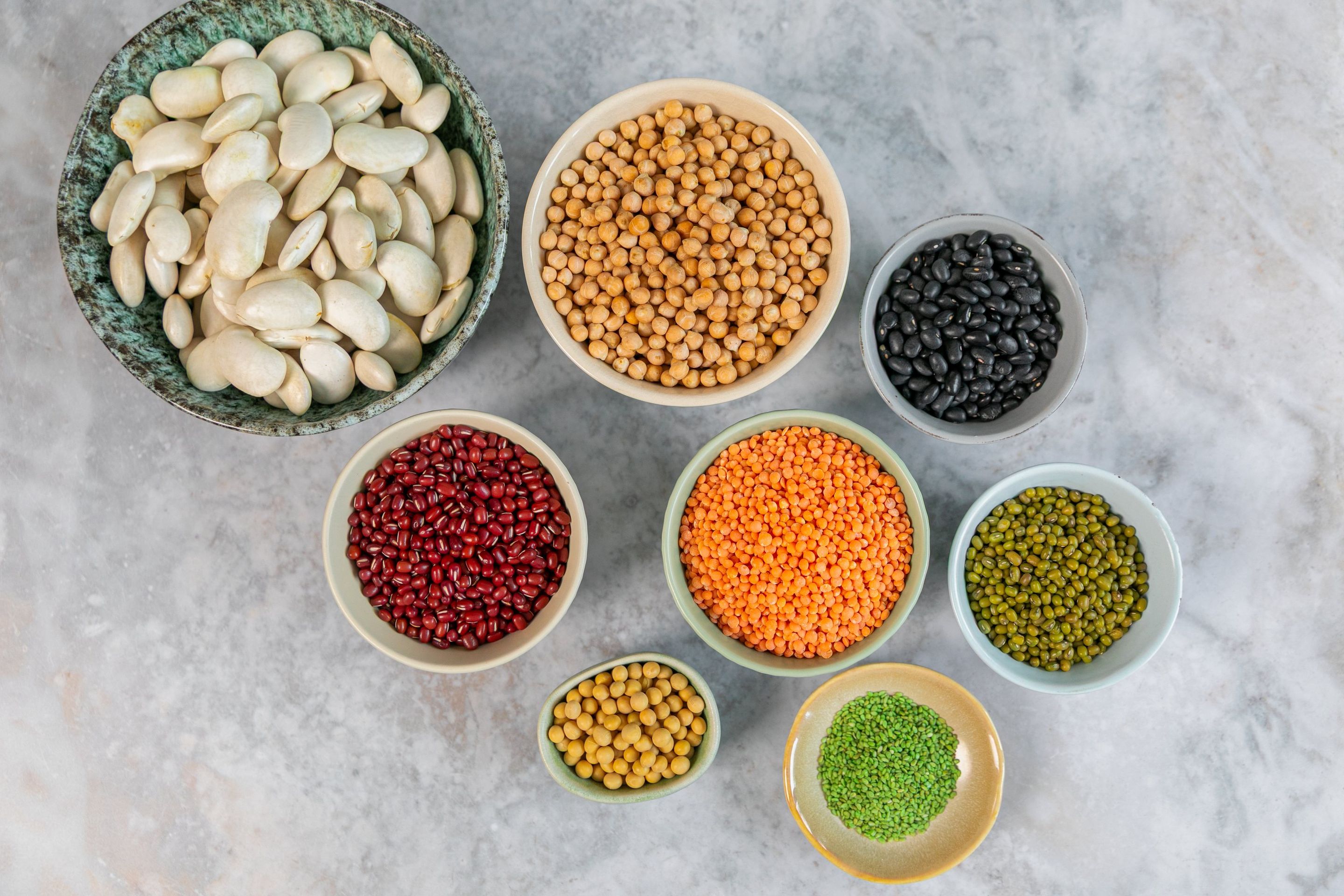
Dr Michael Greger points to a simple consequence: healthy foods are not interchangeable. Another handful of blueberries will not give you what a portion of chickpeas does, and an extra apple will not replace oats.
So diversity is not about finding one “exceptionally healthy” plant and eating as much of it as possible. It is about making use of the ways plants differ from one another.
Why does our gut care about what we eat?
When we eat, we are not feeding only ourselves.
Whatever our body does not digest along the way reaches the large intestine. There it meets a huge community of microorganisms, for which what appears on our menu becomes part of the environment they live in.
And that environment can change. The gut microbiome is not a fixed set of microorganisms we receive once for life. Emeran Mayer describes it as a dynamic ecosystem, able to adapt to changing conditions. And one of the factors that shapes it every day is what we eat.
The Hadza, a hunter-gatherer community in Tanzania, are a good example. Their menu is not the same all year round: it changes with the seasons and with what food is available. Interestingly, scientists observed a similar seasonality in their gut microbiota. Some groups of microorganisms became undetectable in one season, only to reappear later.
So the microbiome does not function in isolation from our everyday life. It changes with the conditions we create for it.
The microbiome is not just about having “more bacteria”
The simplest thing would be to say: the more different microorganisms, the better.
It is true that greater microbiota diversity is linked to health and to a more stable gut ecosystem. But that is only part of the story.
Two healthy people can have completely different microbiomes. There is no single list of bacteria that everyone should have in their gut. What matters is not only who lives there, but also what they can do. Different microorganisms can use different nutrients and produce different compounds.
Mayer highlights two features of a healthy ecosystem: resilience and the ability to recover. A microbiome should cope with change and, after a disruption – caused by an infection, for example – be able to return to balance. So a healthy microbiome does not mean one kept in an unchanging state.
This is where it gets particularly interesting from the point of view of our plate. If different microorganisms can use different nutrients, what matters is not only how many plants we eat, but also how varied our choices are.
Different plants = different fuel for microorganisms
The reason is simple: every plant delivers a different set of compounds to the gut.
Fibre is a good example. We usually talk about it as if it were a single nutrient: a food is “high in fibre” or “low in fibre”. In reality, the name covers many compounds with different structures and properties. Some of them reach the large intestine, where they can be used by microorganisms.
And fibre is only part of the story. Plants also provide polyphenols and many other compounds, which is why oats, beans, onions and blueberries are not the same thing for the microbiome. Each of these foods brings something different.
But it is not only what a food contains that matters, it is also how it is “packaged”.
An orange and the juice squeezed from it come from the same plant, and yet our digestive system does not receive exactly the same thing.
In the whole fruit, nutrients stay locked in the natural structure of its cells. Juicing breaks this structure, and part of the fibre stays behind in the pulp. It is similar with grains. A whole grain has outer layers, an endosperm and a germ. Milling breaks it down physically, and refining also removes parts of the grain, stripping it of fibre, vitamins, minerals and other compounds. As a result, what changes is not only the composition of the food, but also how quickly its nutrients are digested and absorbed, and how much of them travels on to the large intestine.
This is what we call the food matrix – the way nutrients are “packaged” affects how they are released and how much of them makes it further along the digestive tract.
Why does all this matter to us? Because microorganisms do not just use what reaches them – they can produce new compounds. What is more, not every microorganism can use the same things. They differ in their enzymes, and therefore in which compounds they are able to break down. What is good “fuel” for one group may be out of reach for another.
Tim Spector compares gut microbes to “chemical factories”. It is a fitting image: we supply the raw materials, they process them, and the resulting products become part of a chemical dialogue between the microbiome and our body.
That is exactly why what matters is not only how many plants we eat, but also how varied they are.
30 plants a week – science or yet another dietary magic number?
One of the reasons for its popularity was the American Gut Project – a large research project dedicated to the microbiome.
When researchers compared participants’ diets with the microorganisms found in their guts, they noticed an interesting relationship: people who ate more than 30 different plants a week had a more diverse microbiome than those who ate 10 or fewer.
Interestingly, the diet label itself – “vegan” or “omnivore”, for example – said less about the microbiome than how many different plants participants ate over the week.
This does not mean that 30 is a magic threshold. The study showed a relationship in which the more different plants appeared in participants’ diets, the more diverse their microbiome was.
Can you eat 30 plants a week and still have a poor diet?
Yes, you can. “Plant-based” does not automatically mean “healthy”.
Imagine two plant-based lunches. The first is buckwheat with chickpeas, roasted broccoli, tofu and pumpkin seeds. The second – chips, a breaded plant-based meat substitute and a sweetened fruit drink.
On paper, both can be called “plant-based”. Nutritionally, however, they are worlds apart.
In Fed Up, Daniel Lieberman points out that the label of a diet alone – vegan, vegetarian or omnivore – may say little about its quality. The more important question becomes: which foods actually make it up?
He illustrates this with data from a British study of more than 126,000 people. A higher share of unprocessed or minimally processed plant foods was associated with a lower risk of death from cardiovascular disease, while a higher share of ultra-processed plant foods was associated with a higher risk.
In other words, where a food comes from is not everything. Its quality and degree of processing matter too.
Instead of looking for another “superfood”, count the plants on your plate
In practice, diversity starts with everyday choices. We do not need to invent a completely new meal every time – it is enough that it is not always based on the same plants.
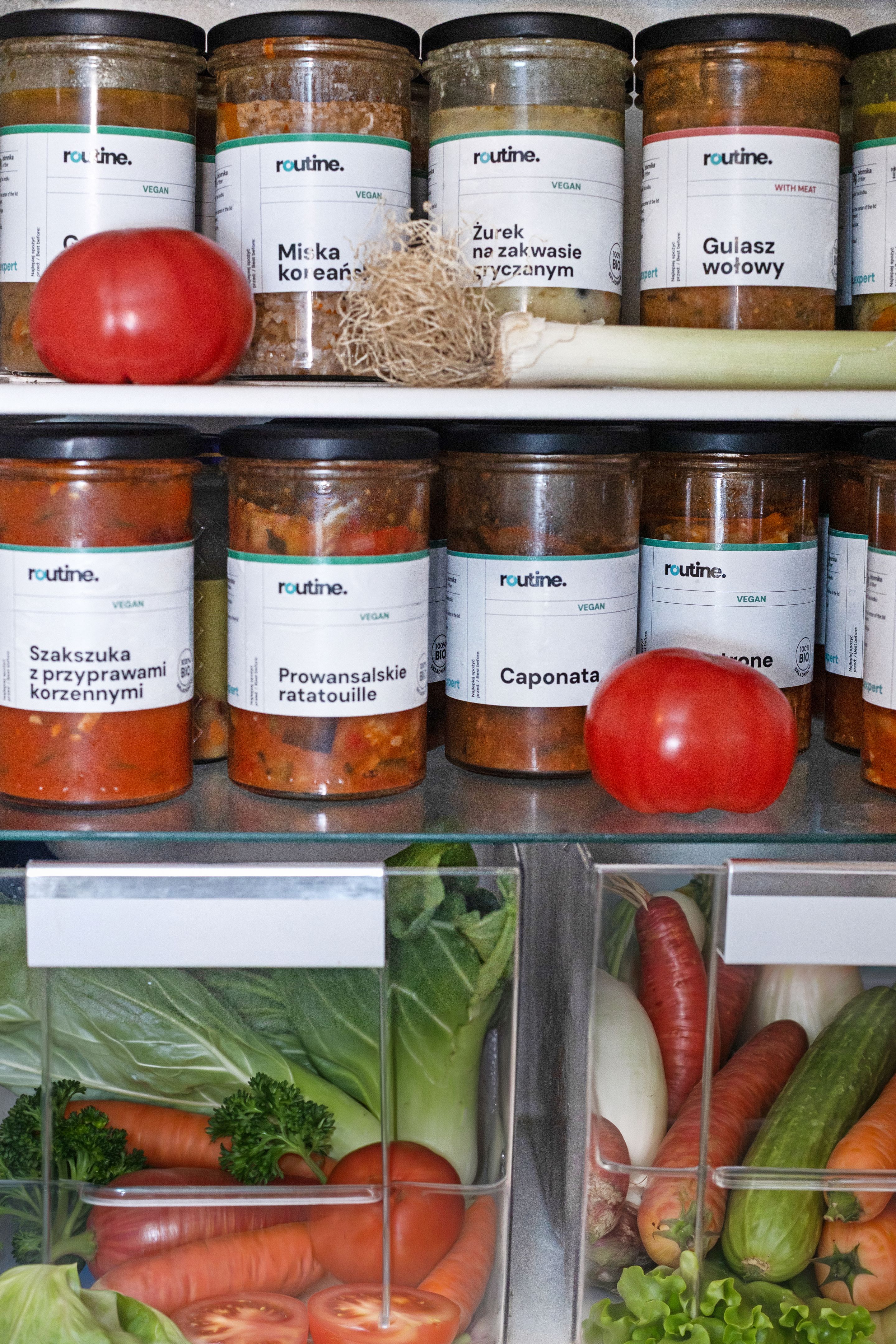
And this is where BIO meals in routine. jars work well.
For example:
- Harira – 18 different plants and 9 g of fibre,
- Oyster mushrooms in plum and soy sauce – 18 plants and 16.2 g of fibre,
- Red curry with sweet potato – 16 plants and 10.4 g of fibre.
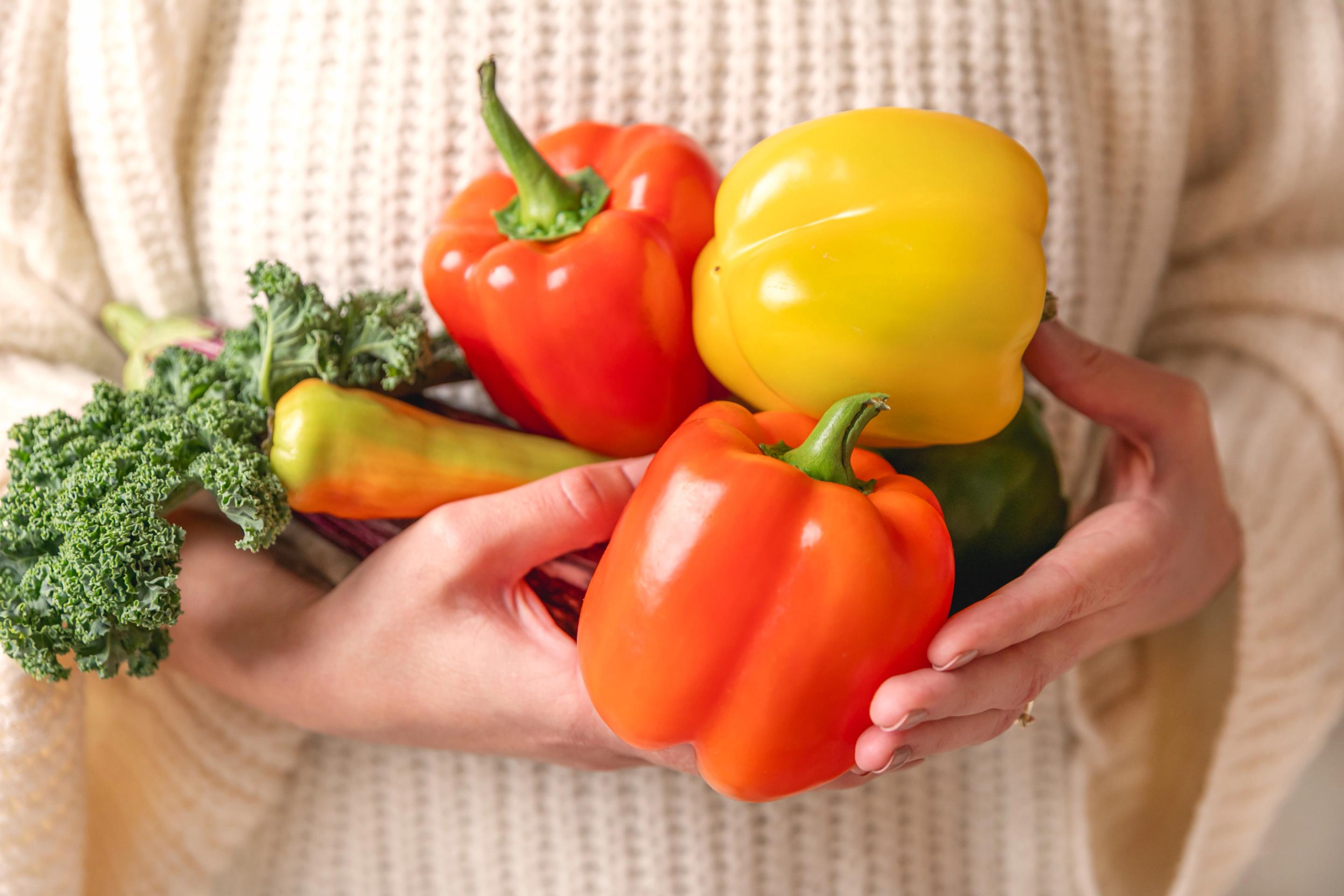
That is just three meals, with 37 different plants between them. Chickpeas, lentils, beans, sweet potato, pepper, plum, ginger, coriander and lime are only some of them. That is why just 2–3 routine. BIO meals genuinely increase the variety of plants on your weekly menu.
It is also a chance to step outside a familiar set of foods and discover new flavour combinations – from Italian caponata and beetroot pilaf to żurek with kimchi or young beet soup with chickpeas.
In the end, it is not about one varied plate, but about variety built over the whole week. Instead of a single “superfood”, broaden your weekly repertoire of plants and flavours. Start with routine. jars and discover new plants, dishes and flavours every week.
Sources
- Spector, T. (2020). Spoon-Fed: Why almost everything we’ve been told about food is wrong. Jonathan Cape.
- Spector, T. (2022). Food for Life: The new science of eating well. Jonathan Cape.
- Greger, M., & Stone, G. (2015). How Not to Die: Discover the foods scientifically proven to prevent and reverse disease. Flatiron Books.
- Lieberman, D. E. (2026). Fed Up: What evolution reveals about food, diet, health, and eating well. Knopf.
- Mayer, E. A. (2016). The Mind-Gut Connection: How the hidden conversation within our bodies impacts our mood, our choices, and our overall health. Harper Wave.
- McDonald, D., Hyde, E., Debelius, J. W., Morton, J. T., Gonzalez, A., Ackermann, G., Aksenov, A. A., et al. (2018). American Gut: An open platform for citizen science microbiome research. mSystems, 3(3), e00031-18.
- Smits, S. A., Leach, J., Sonnenburg, E. D., et al. (2017). Seasonal cycling in the gut microbiome of the Hadza hunter-gatherers of Tanzania. Science, 357, 802–806.
- Rauber, F., Louzada, M. L. C., Chang, K., et al. (2024). Implications of food ultra-processing on cardiovascular risk considering plant origin foods: an analysis of the UK Biobank cohort. The Lancet Regional Health – Europe, 43, 100948.

Author
Julia Zawadzka
routine. expert
Opublikowano