
Lifestyle and the pace of biological aging: how old are you really?
Your date of birth says one thing. Your body may be saying something completely different.
Kamil Jastrzębski · · 10 min read
The science of recent decades shows something that not long ago would have sounded like science fiction: biological age and chronological age are two different numbers. One is written on your birth certificate and cannot be changed. The other, the more important one, depends largely on how you live. It may surprise you, but it can move in either direction. Research shows that the difference in biological age between two people of the same age can be as much as twenty years. It is not a matter of luck or good genes. It is a matter of choices – repeated every day.
“It’s in my genes” is the biggest health myth of our time
Most of us have heard this sentence. Someone in the family had a heart attack, diabetes or obesity, and we automatically assume we are doomed to the same. Dr Dorota Komar, who holds a doctorate in biological sciences, turns this idea on its head in her book “Oszukaj genetyczne przeznaczenie” (“Outsmart your genetic destiny”).
It is undoubtedly true that we inherit our genes. But genes are only an instruction manual – not a life sentence. Whether a given instruction is read depends on the environment in which your cells live. And that environment is you: what you eat, how you sleep, whether you move, how you breathe, what time you get up in the morning.
The field of science that deals with this is called epigenetics. The name sounds complicated, but the idea is simple: epigenetics studies how lifestyle and environmental factors affect which genes are active and which are silenced – without changing the DNA itself. To put it simply: genes are the keyboard of a piano. Epigenetics decides which keys are pressed. On the same keyboard you can play a Chopin étude or a cacophony. The choice is yours.
Komar stresses something even more important: epigenetic effects are not immediate, but they are real and measurable. Your choices today literally rewrite the instructions for your cells – and not only for you, but potentially for future generations. Population studies show that parents’ lifestyle affects gene expression in their children. This is not a metaphor; it is pure biology.
How do we measure biological age?
For a long time, the only measure of aging was the year of birth. Today we have far more precise tools.
Dr Morgan Levine of Yale created a so-called epigenetic clock – an algorithm that analyses DNA methylation patterns and calculates biological age to within a few years. Methylation is one of the epigenetic mechanisms: chemical tags that “sit” on DNA and decide whether a given gene will be read. With age, the patterns of these tags change – and it is these changes that the epigenetic clock measures.
Research from Levine’s lab shows a remarkable phenomenon! The biological age of two people born at the same time can differ by 10 or even 20 years… What does this mean in practice? Two fifty-year-old women sitting next to each other in a café may biologically be – one 38, the other 62. That difference is not a genetic lottery. It is decades of choices.
It is worth noting that epigenetic clocks are a very young field of science. The first of them – the Horvath Clock – was published by Steve Horvath in 2013. That is just 13 years of research, and the field is developing at lightning speed.
Since then, each new generation of clocks has become more precise. Horvath’s clock (2013) measured biological age based on 353 DNA methylation sites. A few years later, Morgan Levine created PhenoAge (2018) and GrimAge (2019) – clocks linked directly to mortality and disease. The real breakthrough, however, was the publication of DunedinPACE in 2022 – this clock does not measure how old you are biologically, but how fast you are aging. This is a crucial difference: you can be 40 biologically but age at the pace of a 55-year-old – or the other way round.
Three epigenetic clocks at routine.
The TruDiagnostic laboratory, which works with Harvard, Yale and Duke, uses three latest-generation epigenetic clocks, which are available through routine.
- OMICmAge – developed with Harvard. It integrates epigenetic data with proteins, metabolites and clinical biomarkers. It measures biological age and identifies the main forces driving aging in your body. Currently the most accurate biological clock.
- SYMPHONYAge – developed with Yale. It measures the biological age of 11 organ systems separately: brain, heart, liver, lungs, kidneys, hormones, immunity, musculoskeletal system, blood, metabolism and inflammation. It shows which systems are aging faster than the others.
- DunedinPACE – developed with Duke and Columbia. It does not measure how old you are biologically, but how fast you are aging. A score of 0.8 means you are aging at a rate of 0.8 biological years for every calendar year. The best indicator for tracking the effects of lifestyle changes.
The second key indicator is telomeres – structures at the ends of chromosomes that work a bit like the plastic tips of shoelaces. Every time a cell divides, its telomeres get slightly shorter. When they become too short, the cell loses its ability to replicate and either ages or dies. The rate of telomere shortening is one of the most direct biological markers of the pace of aging. The good news is that this rate is malleable. Sleep, physical activity, diet and stress levels all have a direct effect on it.
Before we move on to what helps, it is worth looking at what harms us – and in detail, at the cellular level.
Five things that speed up aging
1. Chronic sleep deprivation
Matthew Walker, professor of neurology at UC Berkeley and author of “Why We Sleep”, documents this precisely: a single night of less than six hours’ sleep raises markers of inflammation and accelerates telomere shortening. Sleep is not a luxury… it is the only time when the body repairs DNA damage, produces growth hormone and switches on the glymphatic system – the brain’s biological laundry, which flushes out toxic proteins that build up during the day. Lack of sleep does not just make you tired. Lack of sleep literally speeds up the aging of your cells.
2. A sedentary lifestyle
Daniel Lieberman of Harvard shows in “Exercised” that, in evolutionary terms, our bodies were designed for regular movement – hunting, gathering, migrating. A motionless body is, biologically, a body slowly shutting down. Lack of movement reduces insulin sensitivity, increases systemic inflammation and speeds up the loss of muscle mass – and muscle is one of the most important organs of longevity. Lieberman shows that even moderate activity (150 minutes a week) lowers the risk of premature death by around 35%. Each additional hour brings a smaller gain, but this threshold is key.
3. A disrupted circadian rhythm
Russell Foster, professor of chronobiology at Oxford, documents in “Life Time” that night work, irregular sleep hours and a lack of natural light in the morning are among the most serious – yet most often underestimated – factors that speed up aging. The internal biological clock regulates not only sleep, but also hormone secretion, DNA repair, immune activity and glucose metabolism. When it is out of sync, all these processes work less efficiently. The result is chronic low-grade inflammation. Silent and invisible, but measurable – and the common denominator of almost all chronic diseases and accelerated aging.
4. Ultra-processed food
Epidemiological research from recent years is unequivocal: a diet rich in highly processed products accelerates telomere shortening, chronically raises insulin and cortisol levels, disrupts the gut microbiome and intensifies systemic inflammation. It is not a question of calories – it is a question of the quality of the chemical signals you send to your cells several times a day. Emeran Mayer of UCLA, a pioneer of research into the gut–brain axis, shows that the gut microbiome produces substances that directly affect gene expression throughout the body. Food is information. Processed food sends the wrong information.
5. Chronic stress without recovery
In small doses, cortisol is essential for life. It mobilises energy, sharpens attention and helps us respond to threats. In chronic excess it works the other way round: it damages the hippocampus (the memory centre), raises blood pressure, suppresses the immune system and directly accelerates telomere shortening. Importantly, what matters is not stress itself, but the ratio of stress to recovery. The body copes perfectly well with heavy loads as long as there is room for rebuilding in between. The problem starts when that room disappears.
Five things that slow aging down
This is where the good news begins. And it is concrete.
1. Movement
Lieberman is direct: muscle mass is one of the strongest single predictors of longevity – statistically stronger than BMI, cholesterol or blood pressure. Why? Muscle is an endocrine organ – it produces myokines, biologically active substances that have an anti-inflammatory effect, stimulate neurogenesis in the brain, improve insulin sensitivity and protect blood vessels. Irisin is one of the key myokines and literally activates longevity genes. Two or three strength sessions a week plus regular aerobic activity is, according to current research, the biological minimum that moves the hand of the epigenetic clock in the right direction. Aerobic and strength training work synergistically – we need both.
2. Regular, sufficient sleep
Matthew Walker stresses that seven to nine hours is not a recommendation for the lazy, but a biological necessity. During deep sleep (NREM), the body produces large amounts of growth hormone, repairs DNA damage and switches on the glymphatic system. During REM sleep, it consolidates memory, processes emotions and regulates neurotransmitters. Both phases are essential and both require enough sleep. According to Walker’s research, cutting sleep to six hours a night for two weeks produces the same cognitive deficits as a whole night without sleep. The difference is that people after a sleepless night know they are not in good shape. After two weeks of six hours – they no longer do.
3. Light in the morning, darkness in the evening
Foster explains the mechanism: natural morning light activates melanopsin in the retinal ganglion cells and sends a signal to the suprachiasmatic nucleus – the master biological clock in the hypothalamus. This signal triggers a hormonal cascade: cortisol falls from its morning peak, melatonin stays asleep until the evening, and glucose metabolism works efficiently. Without this signal the biological clock drifts, and all the processes that depend on it work less precisely. Ten to fifteen minutes outdoors within the first hour after waking (without sunglasses) is one of the best-documented and cheapest interventions for slowing biological aging. Likewise, screens emitting blue light in the evening block the evening rise in melatonin and shift the sleep phase. A small change, a huge biological effect.
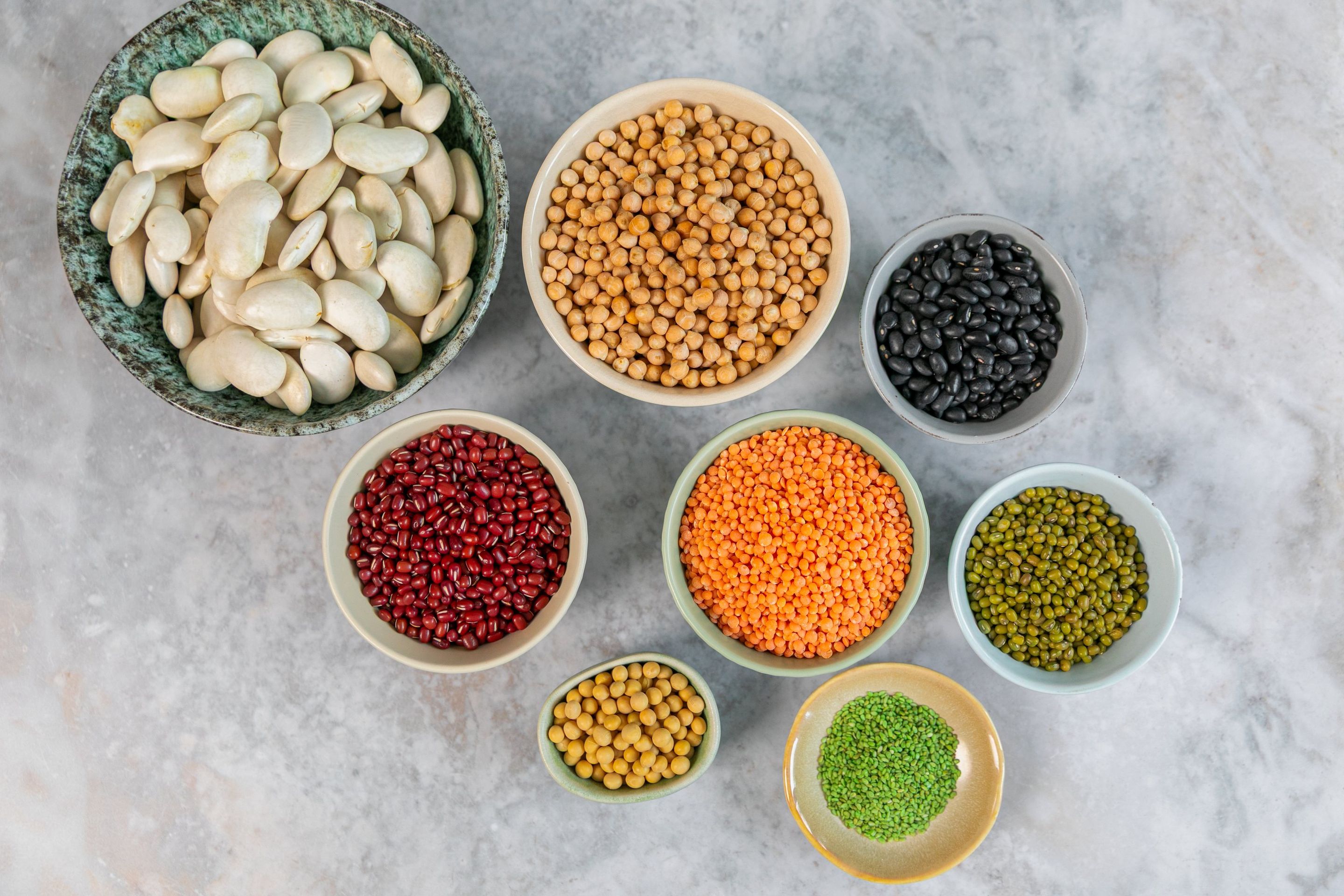
4. A diet rich in diverse plants
Valter Longo of the University of Southern California spent decades studying the world’s longest-living populations (in Sardinia, Okinawa and Ikaria). All their diets share a common denominator: a wide variety of plants, little processed sugar and a moderate amount of animal protein. Longo points out that variety is key here. It is not about eating a single superfood, but about providing the gut microbiome with a broad range of fibre, polyphenols and prebiotics. Thirty different plant species a week is the benchmark from microbiome research. With this kind of variety, the microbiome produces short-chain fatty acids (SCFAs), which directly affect gene expression in the cells of the gut, liver and immune system. Food is epigenetic information. Good information, delivered regularly, changes the way your genes work.
5. Conscious breathing
This is the pillar most often overlooked in conversations about longevity, yet one of the best researched. In “Breath”, James Nestor documents that most adults breathe incorrectly – too fast, too shallowly and often through the mouth. The biological consequences are serious: hyperventilation lowers CO₂ in the blood, which paradoxically makes it harder to deliver oxygen to the tissues, activates the sympathetic nervous system and keeps the body in a state of physiological alarm. Slow, diaphragmatic breathing through the nose (about six breaths per minute) activates the parasympathetic nervous system, lowers blood pressure, reduces cortisol and calms systemic inflammation. It is a biological switch from stress to recovery – available at any moment, free of charge and effective within minutes.
Routine as an epigenetic strategy
There is one element that connects and strengthens all of the pillars above – regularity.
Epigenetics is not about a single heroic effort. It is about repeated signals. The body learns from patterns. Regular sleep times, fixed mealtimes, daily contact with natural light, consistent movement – this is the language you use to talk to your genome.
Foster shows that the circadian rhythm itself – the regularity of activity and rest – affects biological age independently of sleep duration. People with a regular, predictable rhythm of life have a measurably slower rate of cellular aging than people who live chaotically, even if their total amount of sleep is similar.
This translates into a concrete philosophy: it is not about living healthily one day a week. It is about making every day look similar – in terms of sleep, movement, food and light exposure. The body likes predictability. For the genome, predictability is a signal of safety. And safety is the environment in which longevity genes are active and inflammatory genes are silenced.
What does this mean in practice?
Epigenetics is not an academic abstraction. It is the user manual for your body, written not by fate but by everyday decisions. Komar puts it plainly: instead of saying “it’s in my genes”, ask “how can I use this?”. Genes are the starting point, not the destination.
Sources
- Komar DN. Oszukaj genetyczne przeznaczenie. Wydawnictwo Feeria; 2024.
- Levine M. True Age. Avery; 2022.
- Walker M. Why We Sleep. Scribner; 2017.
- Lieberman D. Exercised. Pantheon Books; 2021.
- Foster R. Life Time. Penguin Life; 2022.
- Longo V. The Longevity Diet. Avery; 2018.
- Nestor J. Breath. Riverhead Books; 2020.
- Mayer E. The Gut-Immune Connection. Harper Wave; 2021.
- Sinclair DA, LaPlante MD. Lifespan: Why We Age – and Why We Don’t Have To. Atria Books; 2019.
- Horvath S. DNA methylation age of human tissues and cell types. Genome Biology. 2013;14(10):R115.
- Levine ME, Lu AT, Quach A, et al. An epigenetic biomarker of aging for lifespan and healthspan. Aging (Albany NY). 2018;10(4):573–591.
- Lu AT, Quach A, Wilson JG, et al. DNA methylation GrimAge strongly predicts lifespan and healthspan. Aging (Albany NY). 2019;11(2):303–327.
- Belsky DW, Caspi A, Corcoran DL, et al. DunedinPACE, a DNA methylation biomarker of the pace of aging. eLife. 2022;11:e73420.
- López-Otín C, Blasco MA, Partridge L, Serrano M, Kroemer G. The hallmarks of aging. Cell. 2013;153(6):1194–1217.
- López-Otín C, Blasco MA, Partridge L, Serrano M, Kroemer G. Hallmarks of aging: An expanding universe. Cell. 2023;186(2):243–278.

Author
Kamil Jastrzębski
routine. expert
Opublikowano