Optimal nutrition choices have a positive impact on all 12 hallmarks of aging
Scientists distinguish 12 hallmarks of aging – interconnected changes taking place in our cells. Each of them is influenced by what, how much and when we eat.
Julia Zawadzka · · 10 min read
Aging does not start in old age
We usually start thinking about aging when we notice its first signs. Biologically, however, it continues throughout our lives, at the level of our cells. Every day our DNA is damaged thousands of times, and the body constantly activates mechanisms designed to detect and repair this damage.
How we age is partly the result of the cumulative exposures we subject our bodies to over the years. To a large extent, we create the conditions in which our cells function every day ourselves – through the way we eat, physical activity, sleep and stimulants. A single decision matters little. It is only its repetition that, over time, makes it biologically significant.
That is why we should care not only about our lifespan – the number of years we live – but above all about our healthspan – the largest possible part of life lived in health and good physical condition. A long life takes on a completely different meaning if we can spend its extra years in good shape.
What exactly is aging? The 12 hallmarks of aging
Aging is not a single process. It is a series of interconnected changes taking place at the level of our cells, which over time affect their ability to function properly. Carlos López-Otín and his co-authors organised them into 12 hallmarks of aging, dividing them into three groups: primary, antagonistic and integrative.
Primary hallmarks
These are damage and disruptions that arise at the root of the aging process and accumulate in our cells over time.
1. Genomic instability
Our DNA is exposed to damage every day, which the body deals with thanks to its repair systems. With age, however, the balance begins to shift. Damage builds up, and the ability to repair it effectively declines.
2. Telomere attrition
Telomeres are the protective ends of chromosomes, which get shorter with each cell division. When they reach a critical length, they can stop the cell from dividing further – protecting against the multiplication of damaged DNA, but at the same time limiting the ability of tissues to renew.
3. Epigenetic alterations
Epigenetics regulates which genes are read and how intensively. With age, the patterns of this regulation change, so the cell makes less and less precise use of the information stored in its DNA.
4. Loss of proteostasis
A cell must control the quality of its proteins and remove damaged ones. With age, this system works less and less well, so abnormal proteins can accumulate and disrupt the cell’s functioning.
5. Disabled autophagy
Autophagy works like an internal recycling system that removes worn-out or damaged parts of the cell. Its efficiency declines with age, so the cell becomes increasingly worse at getting rid of what no longer works properly.
Antagonistic hallmarks
These are primarily the body’s responses to the damage that arises. At first they can be protective, but when they become chronic or excessive, they themselves start to contribute to aging.
6. Deregulated nutrient sensing
Cells constantly assess the availability of energy and nutrients, deciding whether to invest resources in growth or in maintenance and repair. With age, the mechanisms responsible for this balance can work less and less precisely.
7. Mitochondrial dysfunction
Mitochondria supply cells with energy and take part in many regulatory processes. With age, damage occurs in them more often and their efficiency declines, which can limit energy production and increase cellular stress.
8. Cellular senescence
Some damaged cells stop dividing but remain in the body. At first this protects against the multiplication of damaged cells, but with age these cells begin to accumulate and can, among other things, sustain inflammation.
Integrative hallmarks
These are the consequences of earlier, accumulating disruptions, which begin to affect the ability of tissues and the whole body to function properly.
9. Stem cell exhaustion
Stem cells are the regenerative reserve of our tissues. With age, their number and efficiency decrease, so the body gradually loses some of its ability to regenerate.
10. Altered intercellular communication
Cells do not work in isolation. They constantly exchange signals. With age, both the sending and the receiving of these signals change, so tissues and organs work in a less coordinated way.
11. Chronic inflammation
With age, chronic, low-grade activation of the immune system becomes increasingly common. Instead of being a short response to a specific problem, inflammation becomes part of the environment in which cells constantly function.
12. Dysbiosis
With age, the composition and diversity of the gut microbiome change. Disrupting its balance can weaken the gut barrier and promote chronic inflammation.
Most importantly, however, these are not three separate stages or 12 independent processes. Damage triggers cellular responses, which over time can cause further disruptions, and their effects begin to show at the level of whole tissues. Aging therefore resembles the gradual deregulation of a connected network more than the failure of a single component.
How does what we eat affect the aging process?
At first glance, what is on our plate may seem far removed from what happens inside a cell. Yet in his book How Not to Age, Dr Michael Greger describes 11 aging-related pathways that are influenced by what we eat.
1. Autophagy
This is the cell’s recycling system, which removes worn-out and damaged components. It is influenced by the availability of energy and nutrients. A constant surplus of them can limit the processes involved in cellular “housekeeping”.
2. AMPK
AMPK acts as a sensor of energy levels in the cell. When energy is scarcer, it helps shift priorities from building and growth towards maintenance and repair.
3. Cellular senescence
With age, cells accumulate that have stopped dividing but still affect their surroundings, for example by fuelling inflammation. The composition of our diet can influence the inflammatory and oxidative environment in which these cells function.
4. Epigenetics
It does not change our DNA, but it affects which genes are active and which are silenced. Nutrition is one of the environmental factors that influence the mechanisms regulating their expression.
5. Glycation
This is the process in which sugars bind to proteins and other molecules, leading, among other things, to the formation of AGEs, which accumulate with age. Food can also be a source of them, and the amount depends partly on how it is prepared. More are formed during dry, high-temperature cooking, such as frying or grilling.
6. IGF-1
IGF-1 is a signal that stimulates cell growth and division. Greger points out that a higher protein intake, especially of animal protein, can increase IGF-1 activity, whereas replacing it with plant protein is associated with lower levels of this growth signal.
7. Chronic inflammation
With age, chronic low-grade inflammation develops more often. Our eating pattern can work in both directions. It can promote a pro-inflammatory environment, or it can provide fibre and plant compounds associated with lower inflammatory activity.
8. mTOR
mTOR responds, among other things, to the availability of energy and amino acids. When nutrients are plentiful, it stimulates growth and building, while limiting processes such as autophagy.
9. Oxidative stress
This occurs when there are more reactive oxygen species than the body can control. Compounds found in plants, such as polyphenols, can stimulate our cells’ own protective systems rather than simply “neutralising free radicals” directly.
10. Sirtuins
These are proteins involved in metabolism, DNA repair and the stress response, among other things. Their activity is linked to the cell’s energy status – and therefore also to the availability of energy.
11. Telomeres
They protect the ends of chromosomes and get shorter with each cell division. Diet can affect them indirectly, for example through oxidative stress and chronic inflammation. Both processes are linked to faster telomere shortening.
These pathways show one important thing: nutrition can reach much further than calorie balance or vitamin levels. The amount of energy, the source of protein and the compounds in food can all influence signals related to growth, repair, recycling and protection of the cell. This is exactly why we can also treat food as information for the body.
Food is information for the body
For the body, food is not just a source of energy and nutrients. What, how much and when we eat is information for our cells. Among other things, it tells them whether there is plenty of energy and they can invest in growth, or whether it is better to devote more resources to maintenance, repair and recycling.
Dr Michael Greger describes this relationship using the example of calorie restriction – reducing energy intake without malnutrition. In laboratory studies, it has been linked to longer life and greater activity of the mechanisms involved in cell maintenance and repair. But this is not about the principle of “the less, the better”. The key is to give the body all the nutrients it needs without a constant surplus of energy.
Nor is it only about calories. Greger draws attention to the amount and source of protein. As a reference point he gives 0.8 g of protein per kilogram of healthy body weight per day, and recommends that it should come from plant sources, such as legumes, whole grains, nuts and seeds. This way of eating naturally provides less of certain amino acids, especially methionine, whose high availability stimulates pathways linked to cell growth.
This does not mean, however, that the recipe for longevity is to cut food and protein to a minimum. Energy and protein remain essential for regeneration and for maintaining muscle mass, especially in older age. It is about balance: providing as much as the body needs, without treating excess as an added benefit.
This lets us look at a meal from a different perspective. Its story does not end the moment it is digested. The amount and type of nutrients, as well as the time when they are available, all affect the signals our cells receive. That is why, in the context of aging, it matters not only what we eat, but also how much and when.
How can food support the cell’s natural protective mechanisms?
We often call berries an “antioxidant bomb”. Behind this phrase lies a fairly intuitive idea: we eat antioxidants, they enter the body and neutralise harmful free radicals. Biology, however, turns out to be more complex.
Reactive oxygen species are formed in our cells every day and are not in themselves something to be avoided at all costs. The problem arises when more of them are produced than the body can control. They can then damage DNA, proteins and cell membranes.
Some compounds found in plants do not act merely as a “sponge” that soaks up free radicals. They can act as a signal for our cells, stimulating their own defence mechanisms. This is an example of hormesis: a small stress stimulus mobilises the cell to strengthen its protection.
Greger illustrates this with, among others, sulforaphane, found in cruciferous vegetables. It can activate the Nrf2 pathway, which stimulates the expression of genes responsible for the body’s own protective mechanisms. So broccoli does not simply have to “neutralise” oxidative stress for us. It can give the cell an impulse that helps it defend itself more effectively.
Diet shapes the environment in which we age
There is no single food that will stop aging. When analysing nutrition in the context of healthy aging, Michael Greger keeps coming back to plant foods. What they have in common is not a single “magic” ingredient, but a wealth of substances that can act on the body in many ways at once.
This matters because food works as a whole. An apple provides more than fibre, a walnut is not just a source of fatty acids, and broccoli is more than sulforaphane. Fibre, polyphenols, carotenoids, vitamins, minerals and thousands of other compounds occur within a specific food structure and can interact with one another. The structure of food itself also matters, as it affects how these compounds are released and used by the body.
That is why the value of a whole food is not the sum of its parts. Isolating a single compound and putting it in a capsule does not recreate the natural proportions, structure and interactions with other food components. It is precisely their interplay that is part of the effect we observe after eating the whole food.
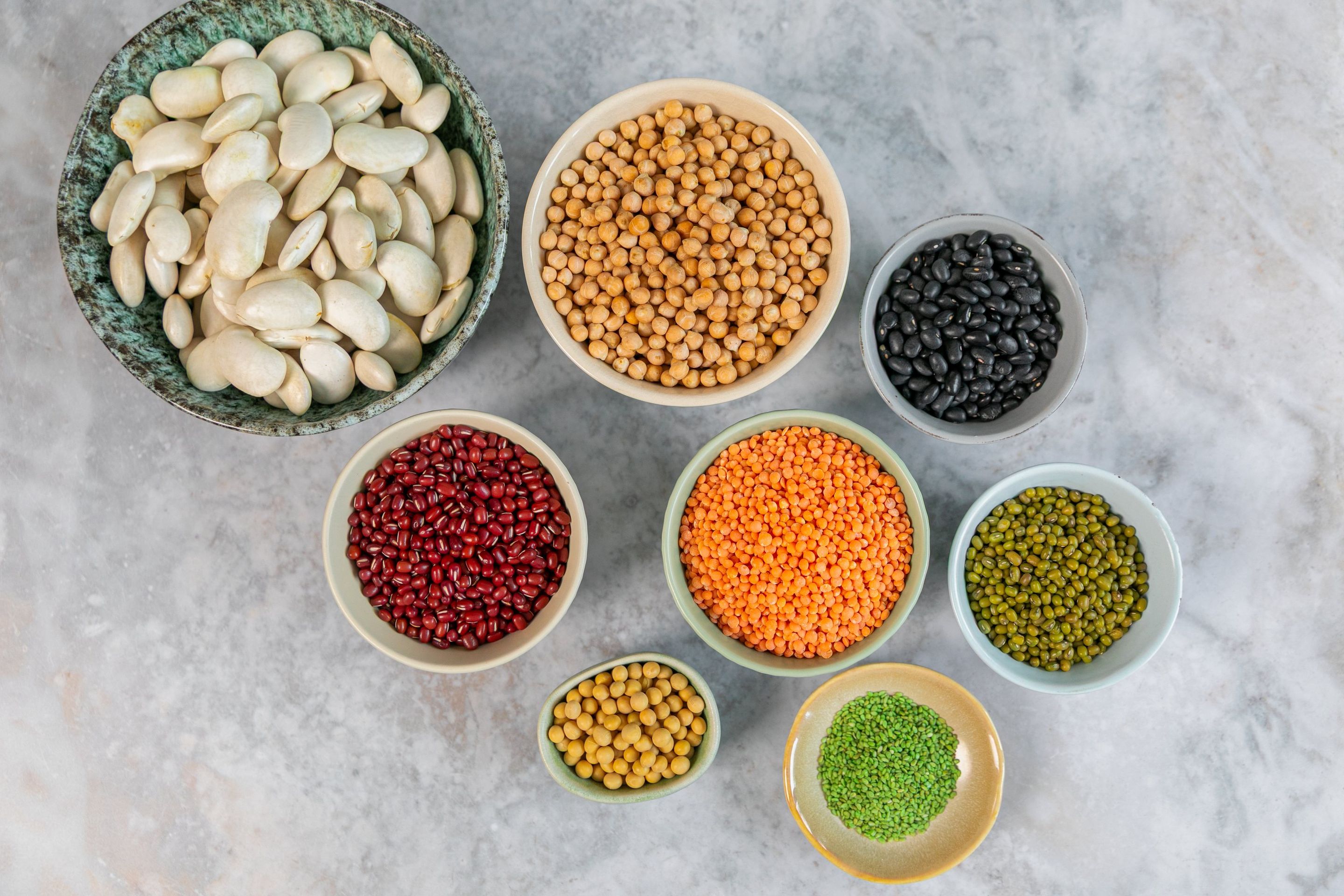
In practice, then, what matters is both what appears on our plate more often and what appears on it less often. Greger points, among other things, to legumes, berries, green leafy vegetables, whole grains, seeds, herbs and spices in the context of inflammation and oxidative stress. At the same time, he highlights limiting excess salt, sugar, saturated fat and cholesterol, as well as exposure to AGEs – compounds associated with glycation and oxidative stress. With AGEs, the way food is prepared also matters: their formation is favoured by dry, high-temperature cooking, such as grilling, frying or roasting.
Greger also gives specific examples. As little as about 12 g of nuts a day has been linked in studies to a lower risk of premature death. Mushrooms are a particularly rich source of ergothioneine, whose levels in the brain decline after the age of 60. Berries, in turn, provide anthocyanins, studied for their role in protecting against oxidative stress and chronic inflammation. Both of these processes intensify with age.
Diet will not stop the biological clock, but it helps shape the environment in which our cells age, and thus affects the condition in which we will live the years to come.
Blue Zones – what can we learn from long-lived populations?
In the so-called Blue Zones – regions known for an exceptionally high number of people who live to a very old age – culture, cuisine and lifestyle differed, but one recurring element was a high proportion of unprocessed plant foods in the diet.
Traditional Okinawa is a particularly interesting example. Greger describes how historically about 90% of its diet consisted of plant foods, with sweet potatoes as the main source of energy. So it was not so much one exceptional food as a whole eating pattern based primarily on plants.
After the Second World War, however, the way its inhabitants ate began to change: the share of sweet potatoes fell sharply, rice, bread, animal products and fast food became more important, and the health indicators of younger generations began to worsen. The genes of the population could not have changed radically within a few decades. What changed was the environment in which those genes operated.
There is no need to copy the diet of an Okinawan or to look for the one food responsible for their longevity. Far more important is the pattern of everyday choices which, repeated over the years, becomes part of the biology of how we age.
Sources
- Greger M. How Not to Age. Bluebird Books, 2023.
- López-Otín, C., Blasco, M. A., Partridge, L., Serrano, M., & Kroemer, G. (2023). Hallmarks of aging: An expanding universe. Cell, 186(2), 243–278.

Author
Julia Zawadzka
routine. expert
Opublikowano