Even at 60, you can gain 8–9 more years of life
Science has the proof – accurate to the month.
Kamil Jastrzębski · · 5 min read
Numbers that change your perspective
In 2022, the prestigious journal PLOS Medicine published a study that did something unusual: instead of saying “eat healthier”, it gave concrete numbers. Exactly how many years of life do you gain by eating more beans? How much does red meat cost you? And most importantly – is there any point in changing anything at the age of 60?
The answer to that last question is: yes. And to a degree that surprises even scientists.
What exactly was studied?
The authors – Fadnes and colleagues from Norway – built a statistical model based on data from the Global Burden of Disease Study (2019), covering populations from Europe, the USA and Asia. They analysed 12 food groups and calculated how switching from a typical Western diet to an optimal one translates into life expectancy – depending on sex and on the age at which the change is made.
The optimal diet in this study is neither a vegan diet nor fasting. It is a pattern rich in legumes, whole grains, nuts, vegetables and fish – with a clear reduction in red and processed meat. A pattern that nutrition science has consistently identified as health-promoting for decades.
Results that are hard to ignore
“A 60-year-old man who switches from a typical Western diet to an optimal one can gain an average of 8.8 years of life.”
For a woman of the same age, it is 8.0 years. For 20-year-olds the figures are even higher – 13.0 and 10.7 years respectively. But it is the result for 60-year-olds that is key, because it overturns one of the strongest myths about health: that at some point it is too late to change. It IS NOT.
Which changes bring the most?
The table below shows how many years of life each change adds – calculated for a 20-year-old who switches from a typical Western diet to an optimal one. The data are mean values with a 95% confidence interval.
| Dietary change | Years of life (women) | Years of life (men) |
|---|---|---|
| More legumes (beans, lentils, chickpeas) | +2.2 | +2.5 |
| More whole grains | +2.0 | +2.3 |
| More nuts | +1.7 | +2.0 |
| Less red meat | +1.6 | +1.9 |
| Less processed meat | +1.6 | +1.9 |
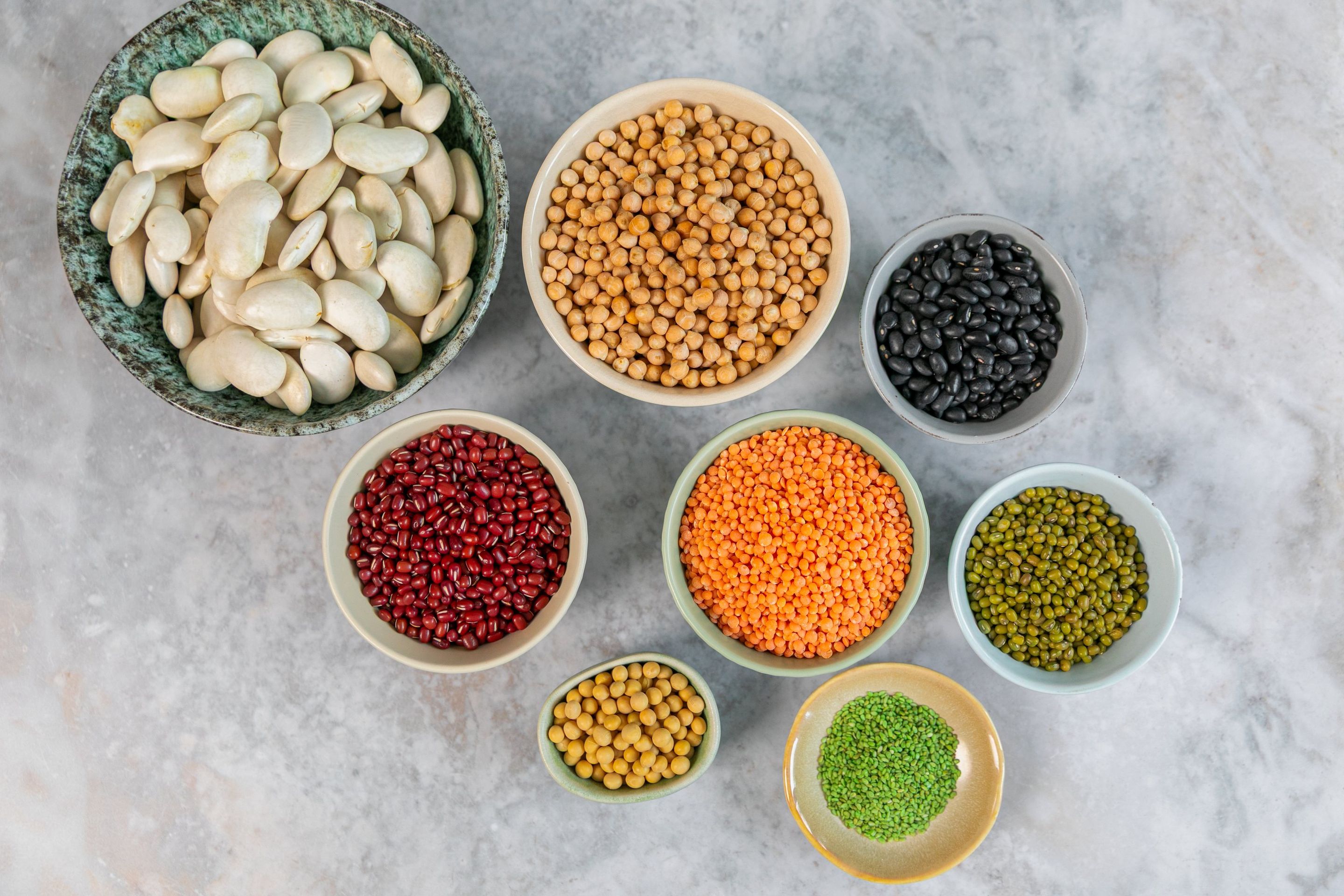
It is worth noting that legumes – beans, lentils, chickpeas, peas – are the clear leader of the ranking, and at the same time one of the cheapest and most widely available products in Polish shops. This change is literally within everyone’s reach.
Age is no excuse
| At 20 | women: +10.7 years | men: +13.0 years |
|---|---|
| At 40 | women: approx. +10 years | men: approx. +11 years |
| At 60 | women: +8.0 years | men: +8.8 years |
| At 80 | women: +3.4 years | men: +3.4 years |
What these data show is something scientists call biological plasticity: the body responds to environmental stimuli regardless of age. Every cell that produces a protein today does so based on current signals – including nutritional signals. Changing your diet changes those signals. Literally.
Why does routine. focus on food as one of its five pillars?
The data from the PLOS Medicine study show that food is not a matter of aesthetics or self-denial – it is an intervention with a measurable health effect, comparable to prescription drugs. Except without a prescription, without side effects, and with an effect that grows with every year the change is maintained.
At routine., the food pillar is not based on restrictions. It is based on precision: knowing what and when to eat, taking into account a person’s individual circadian rhythm, biological markers and health goals. There is no single optimal diet for everyone – there is an optimal diet for you, at this moment in your life.
Legumes, whole grains and nuts are not a healthy-eating slogan. They are the top 3 dietary interventions with a documented impact on life expectancy. And they are exactly what appears in routine. recommendations – not because they sound healthy, but because science confirms it.
Food is one pillar. routine. works with all five.
The PLOS Medicine study focused exclusively on diet. It did not take into account sleep, physical activity, stress management or circadian rhythm – and each of these factors has its own independent scientific evidence confirming its impact on the length and quality of life.
At routine., we work with five pillars at the same time: food, sleep, movement, breathing and the circadian cycle. The synergistic effect – when the body receives the right signals from all directions at once – cannot be measured in a single study. But its mechanism is well known: each pillar strengthens the effectiveness of the others.
Good sleep improves food choices. Regular movement increases cells’ sensitivity to nutritional signals. A synchronised circadian rhythm optimises the timing of metabolism. These relationships are not theory – they are simply physiology.
What does this mean?
“Genes are just the starting point. Diet and lifestyle – that is the destination. The second one is yours to choose.”
The PLOS Medicine study offers something valuable: specificity. You don’t have to believe that eating more healthily “might help”. You can see that switching to an optimal diet at 60 gives you an average of 8–9 years of life. You can see that beans are worth 2.5 years. That the nut you eat with lunch is not a whim – it is a decision about your biology.
And you can see that, however old you are today – you still have time to change the “final” result.
Sources

Author
Kamil Jastrzębski
routine. expert
Opublikowano